Skip to content
JAIN WAVES

Jain Gyan

Principles and vocabulary

The principles Jain life rests on, the traditions described without ranking them, and the words this site uses.

5
minutes to read
8
topics covered
Anyone
written for

Principles

Six ideas the rest follows from

Ahimsaअहिंसाઅહિંસા
Non-violence, and not only in act. It extends to speech and to thought, and to beings a reader may not have counted as beings — the one-sensed life in a plant, in water, in earth. Nearly every practice described on this site follows from taking that seriously: the monsoon stillness of chaturmas, the boiled water of ayambil, the avoidance of eating after dark, the absence of firecrackers at Diwali.
Anekantavadaअनेकान्तवादઅનેકાંતવાદ
Many-sidedness: that reality has more aspects than any one standpoint can capture, and that a statement is true from a standpoint rather than absolutely. It is the reason this section shows disagreements rather than resolving them — a page that prints one date where two traditions keep two is not being decisive, it is being partial and calling it clarity.
Aparigrahaअपरिग्रहઅપરિગ્રહ
Non-possession — of things, and of the attachment to them. For the laity it is a limit voluntarily set rather than a renunciation; for monks and nuns it is total.
Ratnatrayaरत्नत्रयરત્નત્રય
The three jewels — samyak darshana, samyak jnana and samyak charitra: right faith, right knowledge and right conduct. They are the path, and they are taken together; none of the three works alone.
Karmaकर्मકર્મ
In Jain thought karma is substance, not sentiment — fine matter that flows into the soul (asrava), binds to it (bandha), is stopped (samvara), shed (nirjara), and finally exhausted (moksha). There are eight kinds: jnanavaraniya, darshanavaraniya, vedaniya, mohaniya, ayu, nama, gotra and antaraya. That vocabulary appears in the wedding mantras, in the vows and in the pratikraman; it is the technical language of the tradition, and it is worth knowing before reading the rest of this section.
Panch Parameshthiपंच परमेष्ठीપંચ પરમેષ્ઠી
The five worthy of reverence, and the five the Navkar Mantra bows to: arihanta, siddha, acharya, upadhyaya and sadhu. The mantra names no individual and belongs to no tradition exclusively — it is the one thing every Jain says.
The traditions

Digambar and Shwetambar

Described, not ranked. Nothing below is stricter, older, purer or more correct than anything else — where they differ, the difference is simply stated.

Digambar

दिगम्बर · દિગંબર

Digambar monks are unclothed; the tradition holds that complete renunciation includes clothing. Its canon is the Shatkhandagama and the works of Kundakunda, Umasvati, Samantabhadra, Jinasena and others; it does not accept the Shwetambar Agamas, and in particular not the canonicity of the Kalpa Sutra. Its annual parva is Das Lakshan, its day of forgiveness Kshamavani, and it counts sixteen dreams of Trishala where Shwetambar accounts count fourteen.

Shwetambar

श्वेताम्बर · શ્વેતાંબર

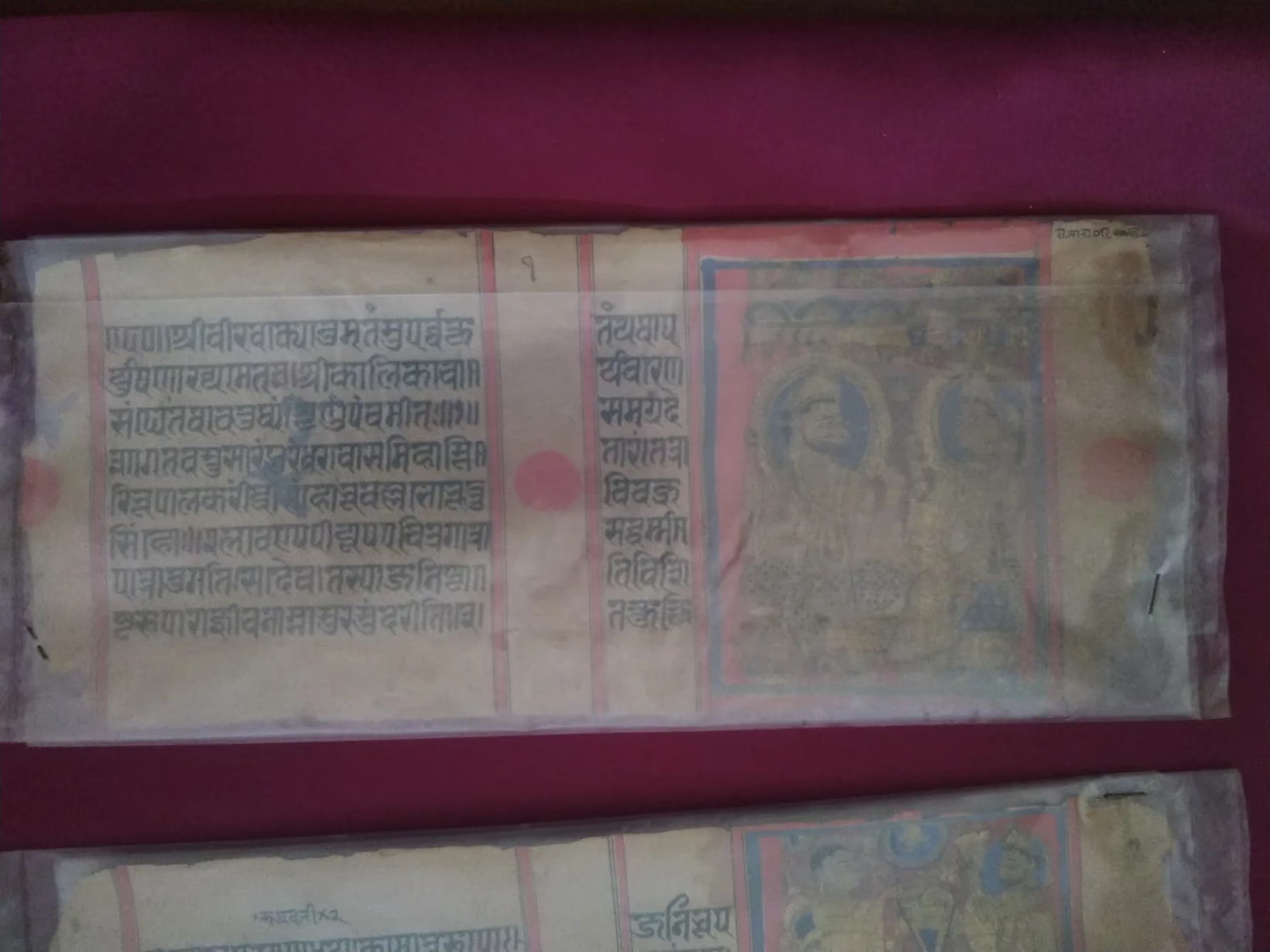
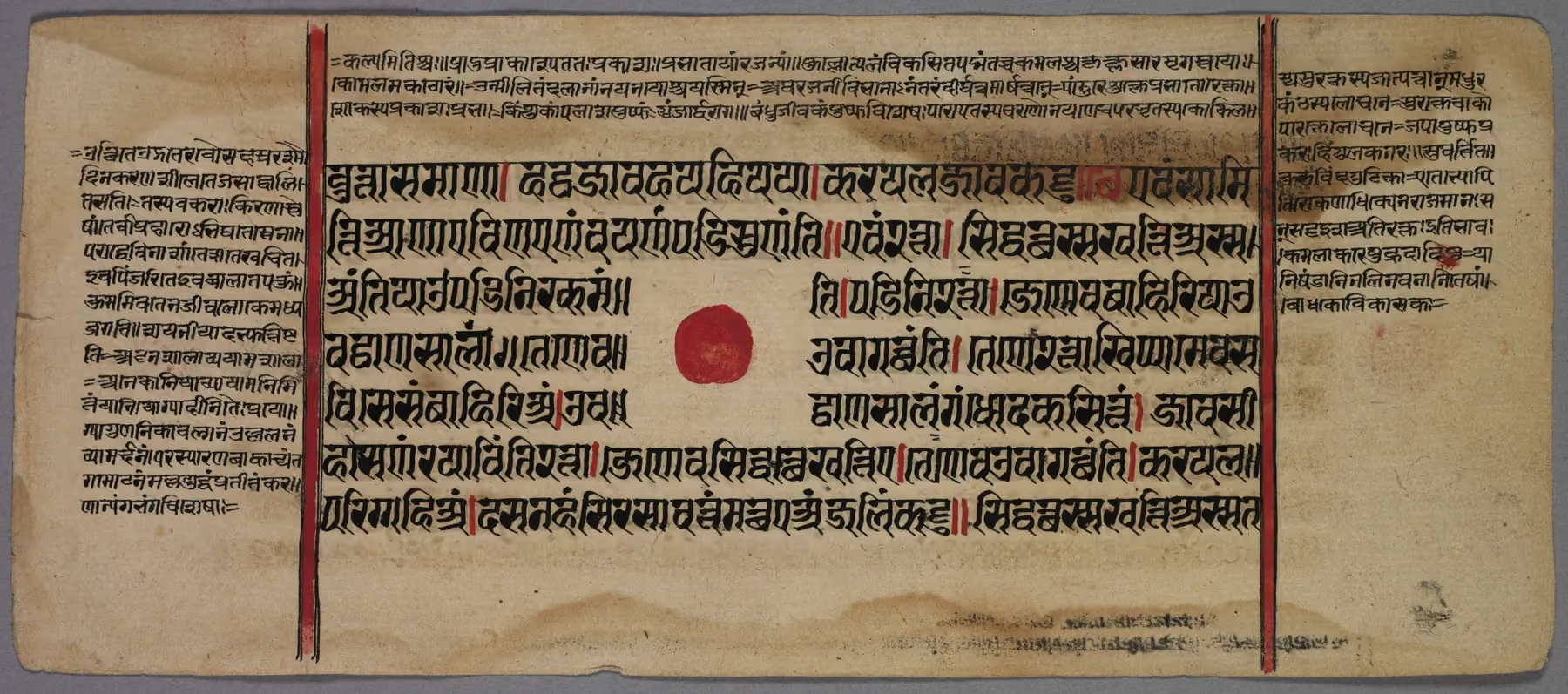
Shwetambar monks and nuns wear white. The tradition accepts the Agamas as fixed at the Council of Valabhi, reads the Kalpa Sutra at Paryushan, and keeps Samvatsari as the last day of that parva. It has three branches, which differ chiefly on image worship.

Branches

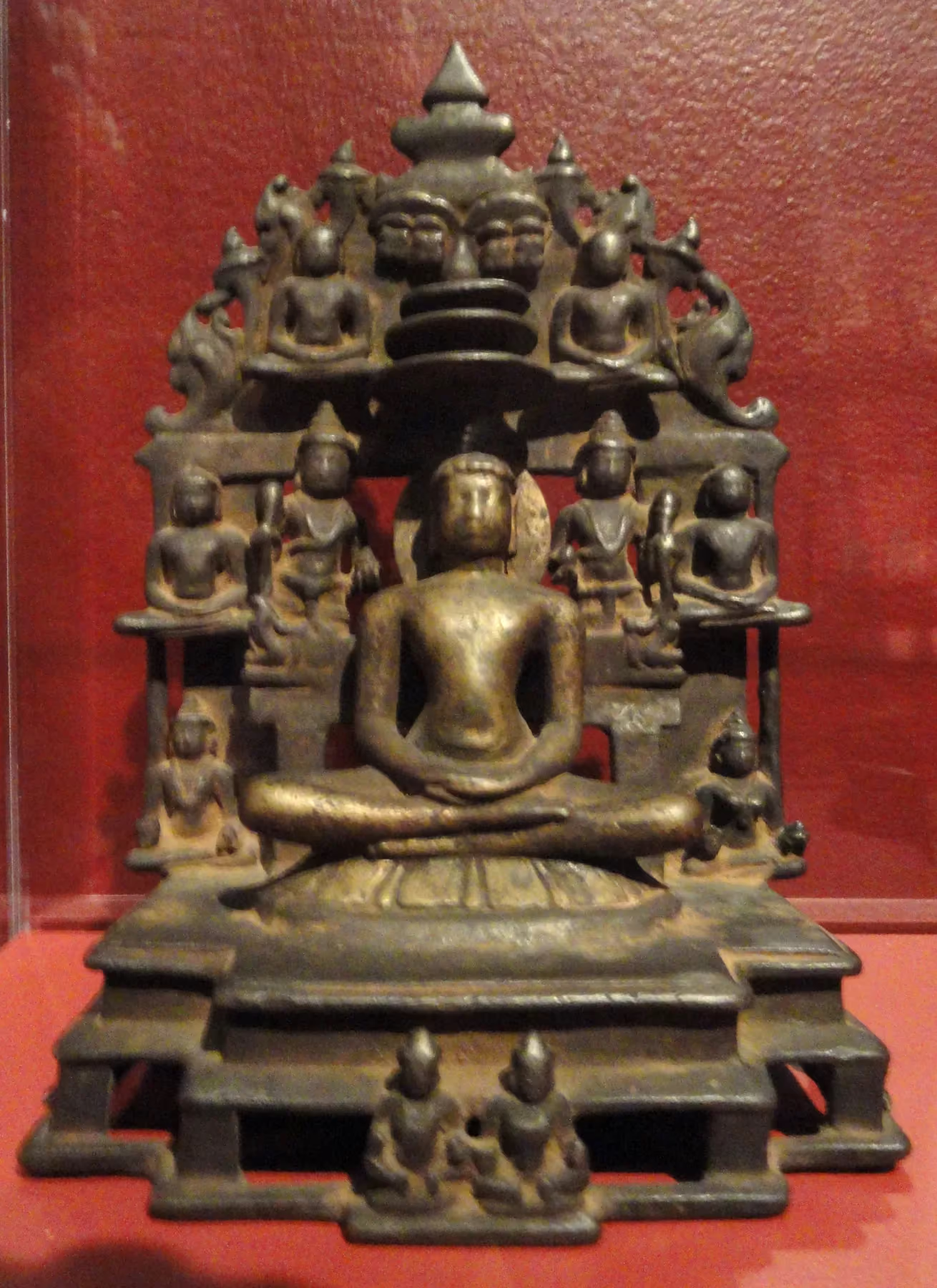
Murtipujak keep images and worship in derasars, and are organised in gachchhas, of which Tapa-gachchha is the largest. Sthanakavasi, following Lonka Shah, do not keep images and gather in a sthanak; they hold that bhava-puja, mental worship, is the most appropriate form. Terapanth, founded by Acharya Bhikshu, likewise does not keep images and is distinctive in having a single acharya for the whole order. Sthanakavasi and Terapanth both end Paryushan on Bhadarva Sud 5 where Murtipujak end it on Sud 4.

Glossary

The words this site uses

Each of these appears somewhere else on the site. Where it does, the entry links back to it.

Derasarदेरासरદેરાસર
A Jain temple, in Gujarati usage. Mandir and jinalaya are used interchangeably; a home shrine is a gharderasar.See it in use
Upashrayउपाश्रयઉપાશ્રય
The hall beside or near a derasar where sadhus and sadhvis stay, and where pratikraman, pravachan and pausadh are held.See it in use
Sthanakस्थानकસ્થાનક
The hall in which Sthanakavasi Jains gather. There is no image in it; that is the point of the name.See it in use
Sanghसंघસંઘ
The community — in the fourfold sense of sadhus, sadhvis, shravaks and shravikas, and in the everyday sense of the local body that runs a derasar or a hall.See it in use
Pedhiपेढ़ीપેઢી
The trust office that manages a tirth — its temples, dharamshala and bhojanshala. Anandji Kalyanji Pedhi is the best known, and manages several of the largest Shwetambar tirths.See it in use
Tirthतीर्थતીર્થ
A crossing place — a site of pilgrimage. Not every Jain temple is a tirth; a tirth carries a particular history, most often a liberation, a recorded miracle, or an exceptional body of art.See it in use
Kshetraक्षेत्रક્ષેત્ર
A field or region, and in this context a sacred site. A siddhakshetra is a place from which souls attained liberation; an atishaya kshetra one of recorded miracle; a kala kshetra one significant chiefly as art and architecture.See it in use
Sadhu and sadhviसाधु · साध्वीસાધુ · સાધ્વી
A Jain monk and a Jain nun. They keep the five mahavratas in full, travel on foot, and stay in one place through chaturmas. In most Jain orders the sadhvis considerably outnumber the sadhus.
Acharyaआचार्यઆચાર્ય
The head of an order, and the third of the Panch Parameshthi. In Terapanth there is one acharya for the whole order; in most other traditions there are many.
Upadhyayaउपाध्यायઉપાધ્યાય
The teacher of scripture within an order, and the fourth of the Panch Parameshthi.
Bhojanshalaभोजनशालाભોજનશાળા
The dining hall run by a trust at a tirth or a large derasar, serving Jain food — usually without root vegetables, and finishing before sunset.See it in use
Dharamshalaधर्मशालाધર્મશાળા
Pilgrim accommodation run by the trust at a tirth. Most do not publish rates or take online bookings; a telephone call is still how it is done.See it in use
Tell us if this is wrong

We have shown our sources and said where they disagree. If you know this to be wrong, or you have a printed vidhi or a panchang that settles it, please tell us — we will correct it and credit you.

Your name and email are used to write back and to credit you, and are never published without your agreement.

Sources

Where this came from

Graded, so you can weigh a claim rather than take it on trust.

Three sites that rank highly for Jain festival and ritual searches — jainknowledge.com, jaingpt.org and grokipedia — are AI-generated. Nothing on this site is sourced from them, and nothing should be.